
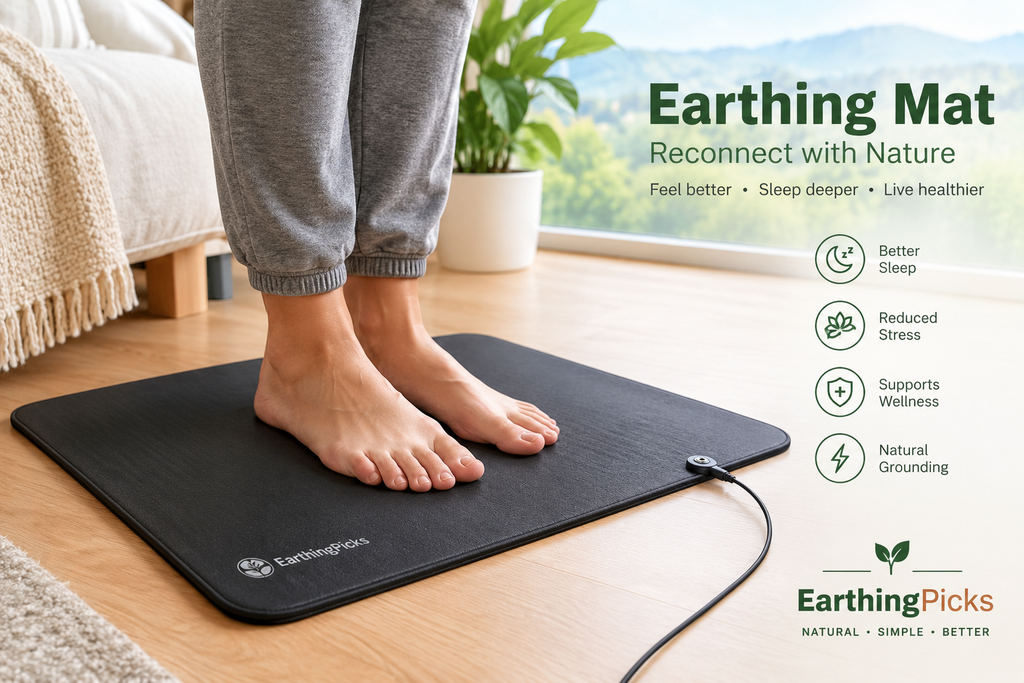
Someone on a podcast, a social clip, or a mat ad told you to take your shoes off and “ground” yourself, so you typed what is grounding into Google and got a pile of conflicting answers.
Here is the straight version: grounding is a simple practice built on an interesting idea and backed by small studies. This guide covers what it involves, the methods people use, how long they keep it up, what studies have found, and the risks.
Quick Answer: Grounding, also called earthing, means direct skin contact with the earth (barefoot on grass, soil, or sand) or using a conductive mat connected to the ground. Proponents say it lets the body take on electrons from the earth. People typically try 10–30 minutes daily. Studies are small, so benefits remain unproven.
Table of Contents
What You Need to Know
- Grounding and earthing are the same practice: bare-skin contact with the earth, or equipment wired to a ground.
- The idea is a hypothesis: the ground holds a slight negative electrical charge, and some people believe bare-skin contact lets electrons pass into the body. It is not proven.
- Common guidance is 10–30 minutes a day. The best-known studies used one hour a day for about a month.
- The most-cited trials enrolled 16 to 21 people, and many relied on self-reported results.
- Outdoor grounding is low-risk. Mats and devices add shock risk. Ask a doctor first if you have an implant, a chronic condition, or recent surgery.
Grounding (Earthing) in One Paragraph
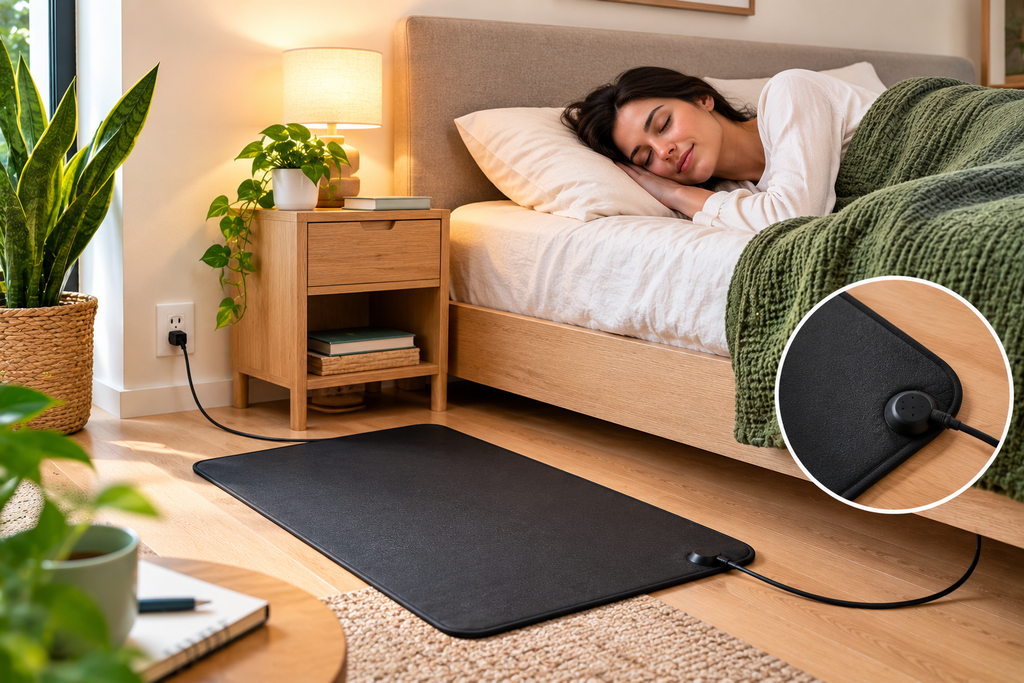
Grounding, also known as earthing, is a wellness practice of making direct contact with the earth to restore the body’s electrical connection to the ground. You touch soil, grass, sand, or water with bare skin, or use a mat, sheet, or similar device wired to a ground.
At the heart of grounding is an unproven idea: that the body can take in or give off electrons through contact with the ground. Researchers have tested it in small studies on pain, stress, sleep, mood, and blood pressure.
What Is Grounding vs. Grounding Techniques?
This guide covers earthing, but “grounding” names four different things, and a search for “what is grounding” mixes them together.
If you need to calm a panic attack right now, you want grounding techniques, not earthing. Earthing is a slow, daily practice, not an emergency tool.
How Is Grounding Supposed to Work?
Grounding rests on the earthing hypothesis: the earth’s surface carries a slight negative charge and holds many free electrons, and skin contact may let your body absorb some of them. Supporters suggest these electrons could neutralize free radicals, the reactive molecules linked to oxidative stress. A 2020 review by Menigoz and colleagues is the usual reference for this idea. Read the review.
Why researchers still want more evidence
Most grounding trials are small, many depend on self-reports, and reviewers have flagged possible conflicts of interest in parts of the literature. Still, a lack of proof doesn’t make the idea false. It means nobody can call it settled.
What Are the Ways to Ground?
There are five common ways to ground: walking barefoot, lying on the ground, wading or swimming, gardening, and using equipment. The hypothesis depends on direct skin contact, so your surface and footwear matter.
- Walk barefoot. Grass, sand, or soil lets your feet touch the earth directly.
- Lie on the ground. Practitioners say a larger contact area increases the effect. That is a claim, not a tested result.
- Wade or swim. Lakes and the sea are named alongside land.
- Garden with bare hands. Soil contact plus light exercise.
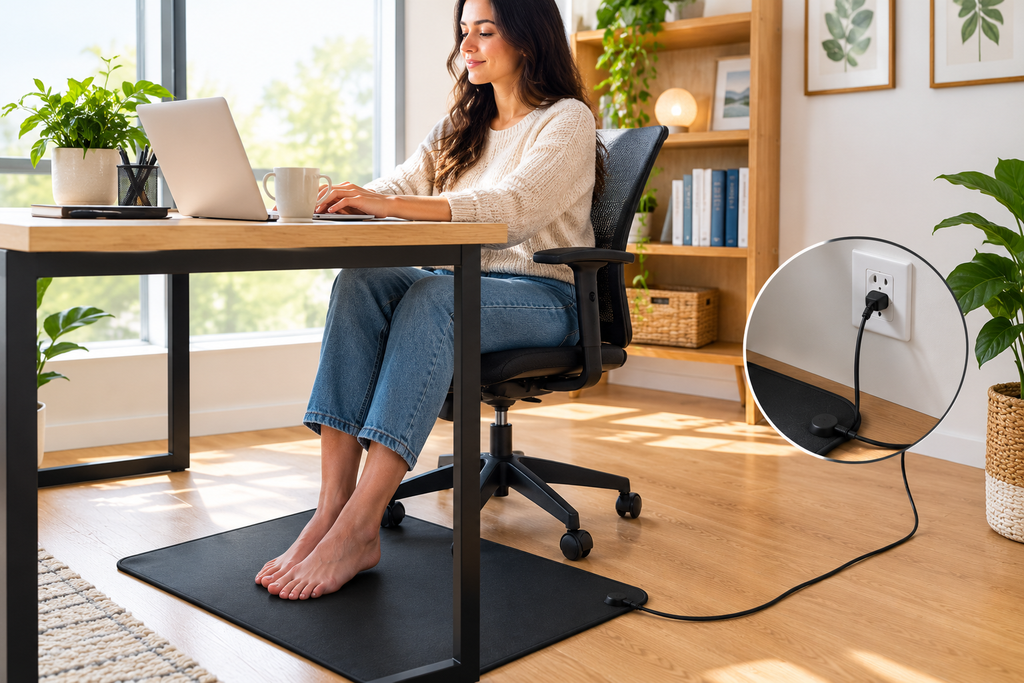
- Use equipment. Mats, sheets, blankets, patches, socks, and shoes with copper plates are sold for times you can’t go outside.
How Long Should You Ground a Day?
There is no established dose, but 10 to 30 minutes a day is the range most often suggested for beginners. The studies often cited used longer sessions: one hour a day for about a month.
| Source | Session length | Duration |
|---|---|---|
| Common practitioner guidance | 10–30 minutes | Daily, ongoing |
| Estiningtyas et al., 2024 (21 adults with diabetes; wound healing) | 1 hour per day | 1 month |
| Estiningtyas et al., 2022 (20 preterm infants; respiratory infections) | 1 hour per day | 30 days |
| Chevalier, 2015 (mood) | 1 hour | Single session |
| Massage therapist trial, 2018 (16 participants) | Not stated per day (worked and slept grounded) | 4 weeks |
The top of the popular 10–30 minute range is half the session length used in the best-known trials. Nobody has established which dose matters, or whether dose matters at all.
A cautious first week (a suggested routine, not a tested protocol)
- Days 1–2: Ground for 10 minutes, barefoot on dry grass, soil, or sand. Pick a clean spot without glass or sharp debris.
- Days 3–4: Ground for 15–20 minutes at the same time of day so your notes stay comparable.
- Days 5–7: Build up to 30 minutes. Try lying down or gardening to compare how each feels.
- Every day: Score sleep quality, pain or stiffness, and mood from 1 to 10. Write them down within 30 minutes of finishing.
- Day 8: Compare your numbers. A log beats a hunch and shows whether a change is real or just expectation.
The Grounding Evidence Scorecard
The research is real but small: the most-cited trials enrolled 16 to 21 people. No study in this table is large enough to settle the question.
| Study (as reported) | Sample | Duration | What was measured | Main limitation | Confidence (editorial rating) |
|---|---|---|---|---|---|
| Massage therapists, 2018 | 16 | 4 weeks | Stress markers, heart rate, respiratory rate | Small sample; gender, body composition, and environment not accounted for | Low |
| Bodyworkers randomized trial, 2019 (Chevalier et al.) | 16 | About 1 week, plus follow-up | Self-reported pain, stress, depression, fatigue | Self-reports; placebo effect not accounted for | Low |
| Grounding patches after exercise, 2015 (Brown et al.) | Not stated in summaries reviewed | Not stated | Muscle damage and pain after exercise | Check the paper for design details | Low |
| Mood study, 2015 (Chevalier) | Not stated in summaries reviewed | 1 hour | Mood | Check the paper for design details | Low |
| Hypertension case history series, 2018 (Elkin et al.) | Small case series | Long-term, self-administered | Blood pressure | Case series cannot show cause and effect | Very low |
| Diabetic wound healing, 2024 (Estiningtyas et al.) | 21 | 1 hour/day for a month | Wound healing | Small sample | Low |
| Preterm infants, 2022 (Estiningtyas et al.) | 20 | 1 hour/day for 30 days | Length of respiratory infections | Quasi-experimental; more research needed on children | Low |
Save or screenshot this scorecard to judge a grounding claim in 30 seconds. It shows how big each study was, how long it ran, and what limits it.
What Does Research Suggest Grounding Might Help?
Small studies have explored grounding for stress, pain, sleep, mood, blood pressure, and wound healing, but none shows that it treats any condition. The reported effects are modest and mostly self-reported, so “worth studying” fits better than “proven.”
Does grounding actually work?
Nobody can say yet. The studies show small positive signals, but samples are tiny and placebo effects are not ruled out. So what is grounding actually good for? A low-risk experiment you can track yourself.
Sleep and stress
In the 2018 massage therapist trial, participants showed a trend toward lower stress after four weeks. Related reports from the same group also mention longer sleep and fewer sleep disturbances.
Pain and recovery
A 2015 study by Brown and colleagues tested grounding after exercise-induced muscle damage. Participants using patches reported lower pain. Read the study.
Mood
A 2015 study by Chevalier found that one hour of grounding seemed to improve mood. Read the study.
Blood pressure
A 2018 case history series by Elkin and colleagues suggested long-term self-administered grounding may lower blood pressure in people with hypertension. A case series cannot prove that grounding caused the change. Read the study.
Wound healing
The 2024 diabetes study (21 people) reported faster wound healing with one hour of grounding a day for a month.
What Are the Symptoms of “Lack of Grounding”?
No recognized medical diagnosis is called “lack of grounding.” Proponents link it to fatigue, aches, low mood, and poor sleep, but those symptoms are common and have many causes.
A 2023 paper by Oschman links illnesses in technologically advanced societies to lack of grounding. That is a proposal from within the earthing field, not a diagnostic standard.
If you have persistent fatigue, pain, or low mood, a healthcare professional can look for underlying causes. Grounding may offer temporary relief at most and should not replace that evaluation.
Is Grounding Safe? Who Should Check With a Doctor First
Outdoor grounding, such as walking on grass or swimming, is generally low-risk. Grounding mats and devices add a risk of electrical shock. Follow the manufacturer’s instructions exactly, and ask a doctor first if you have an implant, a chronic condition, or recent surgery.
- Equipment: Read the instructions before first use and do not modify cords or adapters.
- Medical conditions: Do not stop or change treatment for any condition because of grounding.
- Children and infants: Infant research is limited, so ask a pediatrician before trying it.
- Symptoms that persist: See a healthcare professional rather than extending grounding sessions.
Common Grounding Mistakes (and Fixes)
Most grounding disappointment comes from a short list of avoidable errors.
- Judging it after one session. Fix: run the 7-day log above before deciding anything.
- Wearing insulating soles. Rubber and foam block the direct skin contact the hypothesis depends on. Fix: go barefoot on grass, sand, or soil.
- Treating it as a cure. Grounding is not a treatment for fatigue, pain, or anxiety. Fix: see a professional for symptoms that persist.
- Confusing it with anxiety grounding techniques. Fix: for in-the-moment calming, use mental grounding exercises instead.
- Skipping the instructions on equipment. Fix: read the manual, and check with a doctor if you have an implant or recent surgery.
Indoor Grounding Options When You Can’t Go Outside
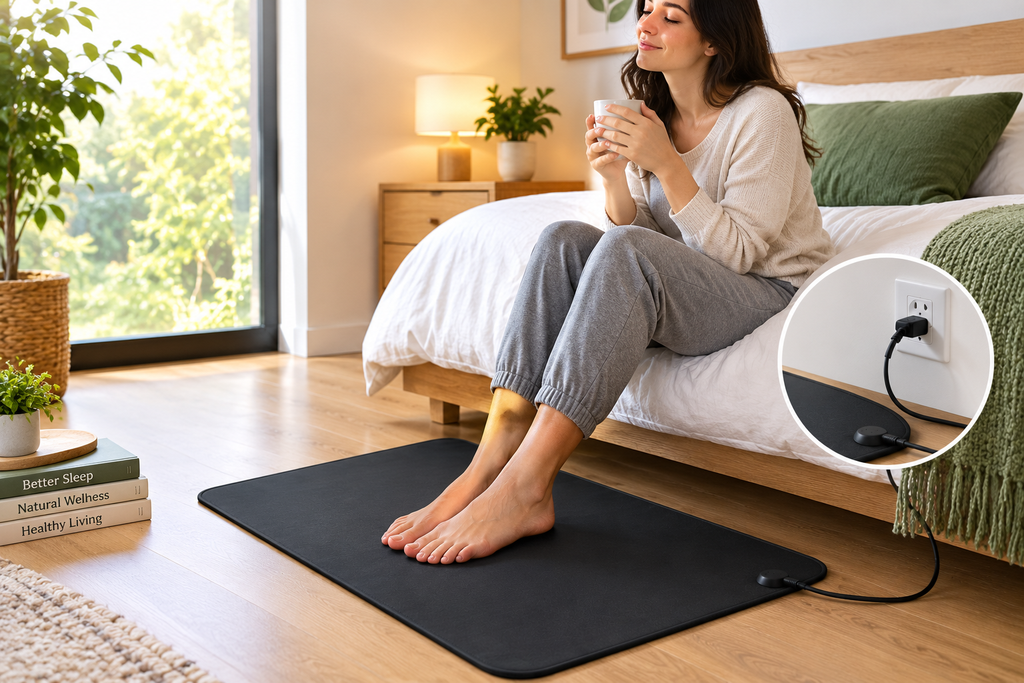
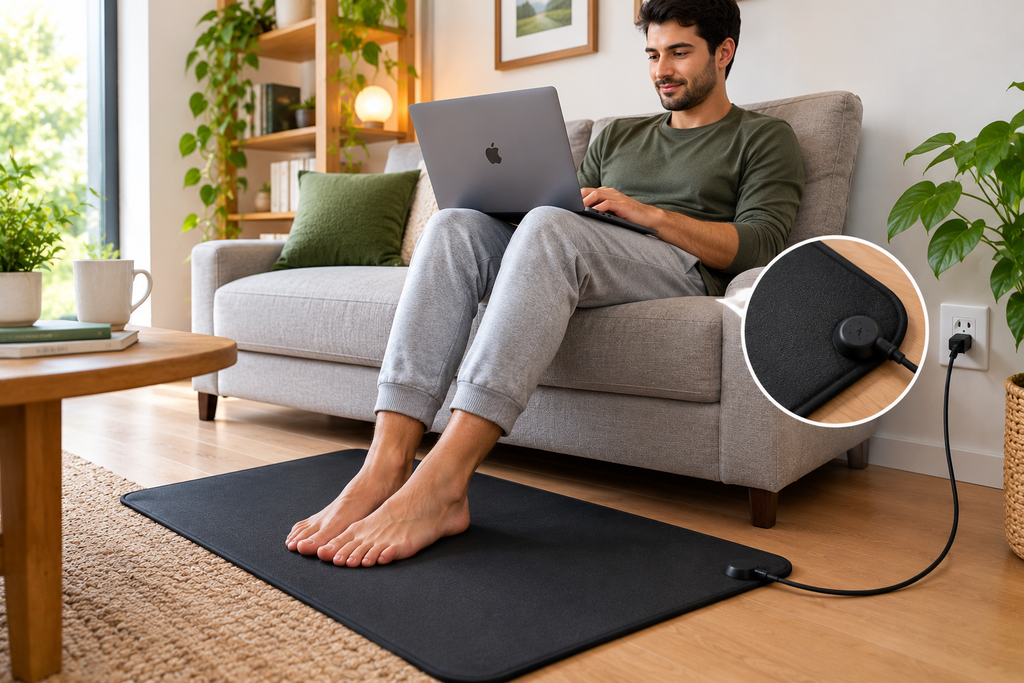
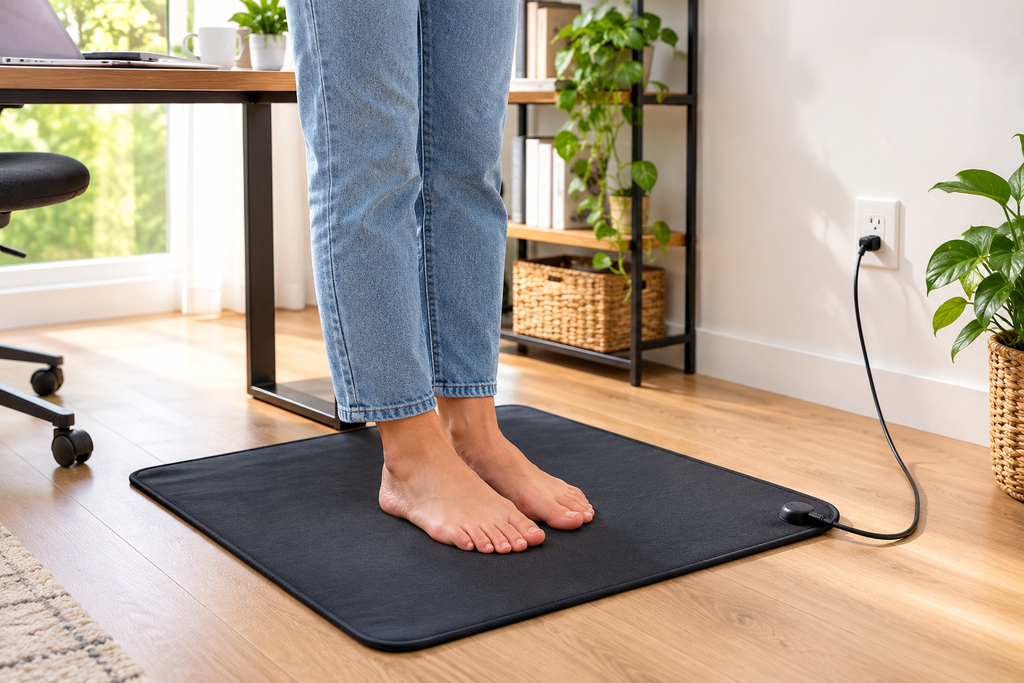
When weather, work, or location rules out walking barefoot, grounding equipment is the indoor alternative. Mats and similar products create a conductive path between your skin and the ground, and most plug-in versions connect through a wall outlet’s ground port.
Earthing Picks may earn a commission if you buy through links on this page, at no cost to you.
Grounding FAQ
How long should you ground a day?
There is no established dose. Common guidance is 10 to 30 minutes a day, and beginners can start near the low end. Some studies used one hour a day for about a month, such as trials in adults with diabetic wounds and in preterm infants. Because the evidence is small, treat these figures as practice norms, not medical dosing, and ask a doctor if you have a health condition.
What are the symptoms of lack of grounding?
No recognized medical diagnosis is called lack of grounding. Proponents link it to fatigue, aches, low mood, and poor sleep, but those symptoms are common and have many causes, from stress to medical conditions. Grounding is not meant to cure any of them. If they persist, a healthcare professional can look for underlying causes.
What age does grounding stop?
Earthing has no established age limit in the research reviewed, and one small study tested it in preterm infants. If you mean grounding as a punishment for a child, there is no standard age either; families and parenting experts set limits differently. If you mean earthing for a child or older adult, ask a pediatrician or doctor first.
Is grounding the same as earthing?
Yes. Grounding and earthing are two names for the same practice: reconnecting the body to the earth through bare-skin contact or conductive equipment. It differs from grounding techniques for anxiety, which are mental exercises with no earth contact, and from electrical grounding in wiring, which is a building safety feature.
Can you ground through shoes or on concrete?
The earthing hypothesis depends on direct skin contact with the earth or a conductive path to it, so insulating soles such as rubber or foam work against the idea. The surfaces most often named are grass, soil, sand, and water. Concrete is rarely named, so whether it works is unverified here; barefoot on grass or sand is the safer bet.
Is grounding safe?
Walking barefoot on grass or wading in water is generally low-risk. Grounding mats and similar devices add a risk of electrical shock, so follow the instructions closely. Check with a healthcare professional first if you have an implant, a chronic condition, or recent surgery. Grounding may offer temporary relief but is not a cure and shouldn’t replace medical care.
Does grounding actually work?
Evidence so far is limited. Small studies, mostly 16 to 21 participants, reported lower stress, pain, and fatigue and better sleep, but many relied on self-reports and did not rule out placebo effects. Larger, independent trials are needed. Until then, grounding is best viewed as a low-risk outdoor practice worth tracking personally, not a proven treatment.